Human - Centered Design
Design Challenge :
Client
Coursera
Student - Led
Year
01/01/2023

Project Overview
Millions of people—especially low-income households, SNAP users, seniors, and anyone without reliable transportation—continue to face major barriers to accessing healthy food. Long travel distances, limited broadband, low nutrition literacy, and distrust of online ordering all widen the digital divide, yet most food-delivery apps still assume users have cars, stable internet, and the skills to navigate complex interfaces. To solve this, I designed a mobile app concept that dynamically adapts to users’ access, transportation, and literacy needs through features like an Access-Aware Mode, simplified visual nutrition guidance, safe delivery instructions, and budget-friendly “carryable” grocery bundles optimized for walking or transit. The result is a user-centered, scalable model that reduces food-access inequities while addressing real operational challenges—showing how thoughtful UX/UI design can make healthy eating more attainable for underserved communities and more sustainable for the businesses that serve them.
-
Our research revealed that designing digital experiences for nutrition and food access requires addressing a layered set of user challenges that span literacy, trust, accessibility, and environmental constraints. Adults navigating online food ecosystems—particularly SNAP participants and food-insecure users—must interpret nutrition labels, assess product quality, manage budgets, and make health-driven choices within platforms that are often not designed for low digital literacy. Studies show that these users frequently struggle with functional, interactive, and critical digital food literacy, which limits their ability to make informed online purchases and highlights the need for simplified interfaces and guided decision-making tools
-
Millions of users—especially low-income households, SNAP participants, seniors, and people without reliable transportation—struggle to access healthy food. Barriers like long travel distances, limited broadband, low digital or nutrition literacy, and distrust of online ordering create a digital divide in the food ecosystem. Most food-delivery apps overlook these realities and assume users have cars, stable internet, and the ability to interpret complex nutrition information.
-
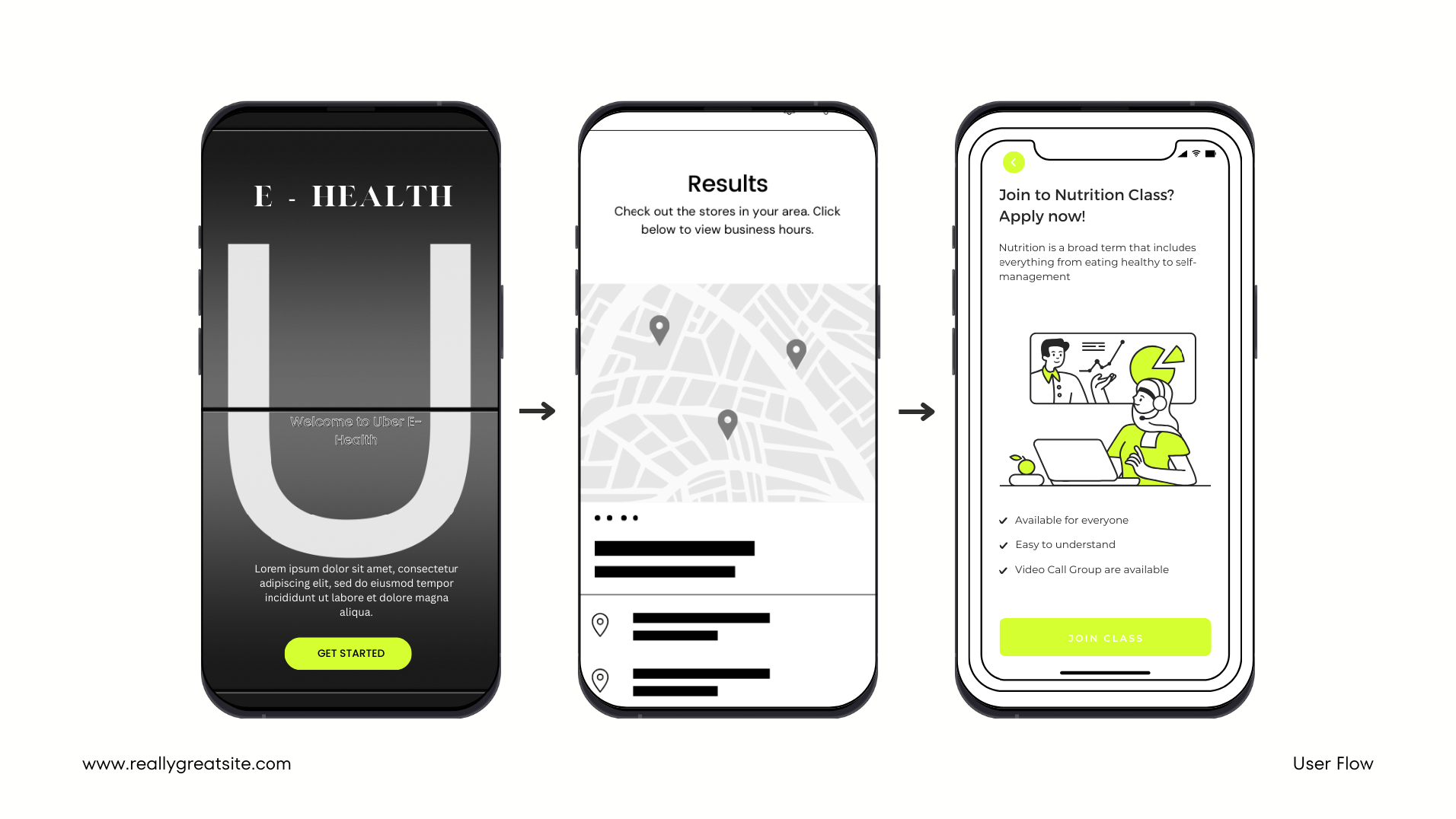
I designed a mobile app concept that adapts dynamically to users’ access, transportation, and literacy needs. Core features include an Access-Aware Mode that personalizes the experience based on transportation constraints; simplified, visual nutrition guidance for low-literacy users; safe and customizable delivery instructions; and budget-friendly “carryable” grocery bundles optimized for walking, public transit, or rideshare users. The UX prioritizes trust, clarity, affordability, and accessibility—ensuring the app works for users who need support the most.
USER PROFILE
USER PROFILE

““I am new to the area and don’t
know where there are good food options available. I am interested in food delivery services and platforms that provide food assistance with nutritional knowledge in mind.””
-
Marcus is a tech-savvy professional who values convenience and efficiency in his daily life. With a busy work schedule, he often relies on digital solutions to manage his time effectively. He enjoys trying new technologies, exploring food delivery options, and appreciates seamless user experiences.
-
- Past experiences of Users face challenges without prompt and
effective customer support.Users feel overwhelmed due to a lack of guidance on proper nutrition.
-
Item description
Qualitative Research
Impact of COVID -19 On American Food System Security
“Prior to the COVID-19 pandemic, U.S. household food insecurity rates were about10.5 percent in 2019, representing 13.7 million households and 35 million Americans”.
Stanley, K., Harrigan, P. B., Serrano, E. L., & Kraak, V. I. (2021).
“One in four urban U.S. households with children experienced food insufficiency and adverse mental health”
Stanley, K., Harrigan, P. B., Serrano, E. L., & Kraak, V. I. (2021).
“By December 2020, 11 million Americans had transitioned into poverty after losing their Jobs and depleting the short-term emergency funds provided by the federal government through the 2020 Coronavirus Aid, Relief, and Economic Security (CARES) Act”
Stanley, K., Harrigan, P. B., Serrano, E. L., & Kraak, V. I. (2021).
“March 2021, 18 million adults reported not having enough food, and 67 million adults had difficulty paying for household expenses, such as rent, food, or medical costs”
Stanley, K., Harrigan, P. B., Serrano, E. L., & Kraak, V. I. (2021).
Comparison of a web-based vs in-person nutrition education program for low-income adults
(LM Neuenschwander · 2013)
Participant Age Distribution
Web - Based Participant Satisfaction
Design Concept

-
Flexible, expert advice when you need it. Book hourly support across a range of topics—from planning to problem-solving. This focused consultation will help clarify your goals, map out next steps, and identify opportunities for growth.
-
Flexible, expert advice when you need it. Book hourly support across a range of topics—from planning to problem-solving. This focused consultation will help clarify your goals, map out next steps, and identify opportunities for growth.
-
Flexible, expert advice when you need it. Book hourly support across a range of topics—from planning to problem-solving. This focused consultation will help clarify your goals, map out next steps, and identify opportunities for growth.


Certifacation
Take a minute to write an introduction that is short, sweet, and to the point. If you sell something, use this space to describe it in detail and tell us why we should make a purchase. Tap into your creativity. You’ve got this.